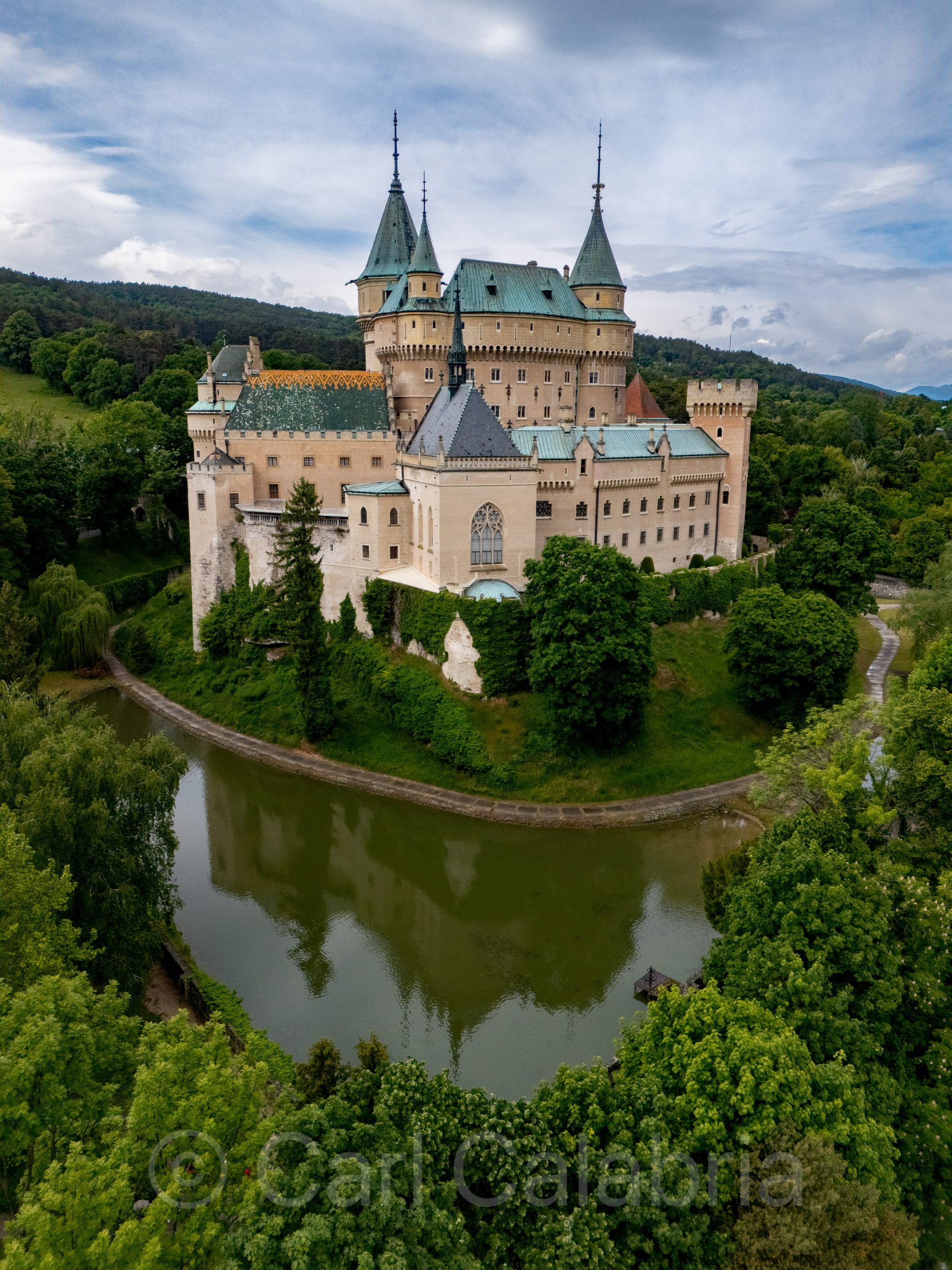
Today, I decided to make a day trip to visit the Bojnice Castle in Slovakia. It was originally built in the 12th century as a Romanesque fortress with Gothic and Renaissance elements. It stands on a travertine hill and consists of an inner and outer castle with three courtyards and is surrounded by a moat. In the late 19th century, Count Ján Pálffy extensively renovated the castle in a romantic neo-Gothic style inspired by French Loire Valley châteaux and other European castles, giving it its current fairy-tale appearance. Beneath the castle is a cave that serves as its water source. I spent a total of ten hours driving today, in large part to see this castle. On the way there, I began to question if the trip would be worth it, especially as it rained for much of the day. Miraculously it stopped half an hour before I arrived and I was able to capture what I consider to be one of my best ever aerial photos.
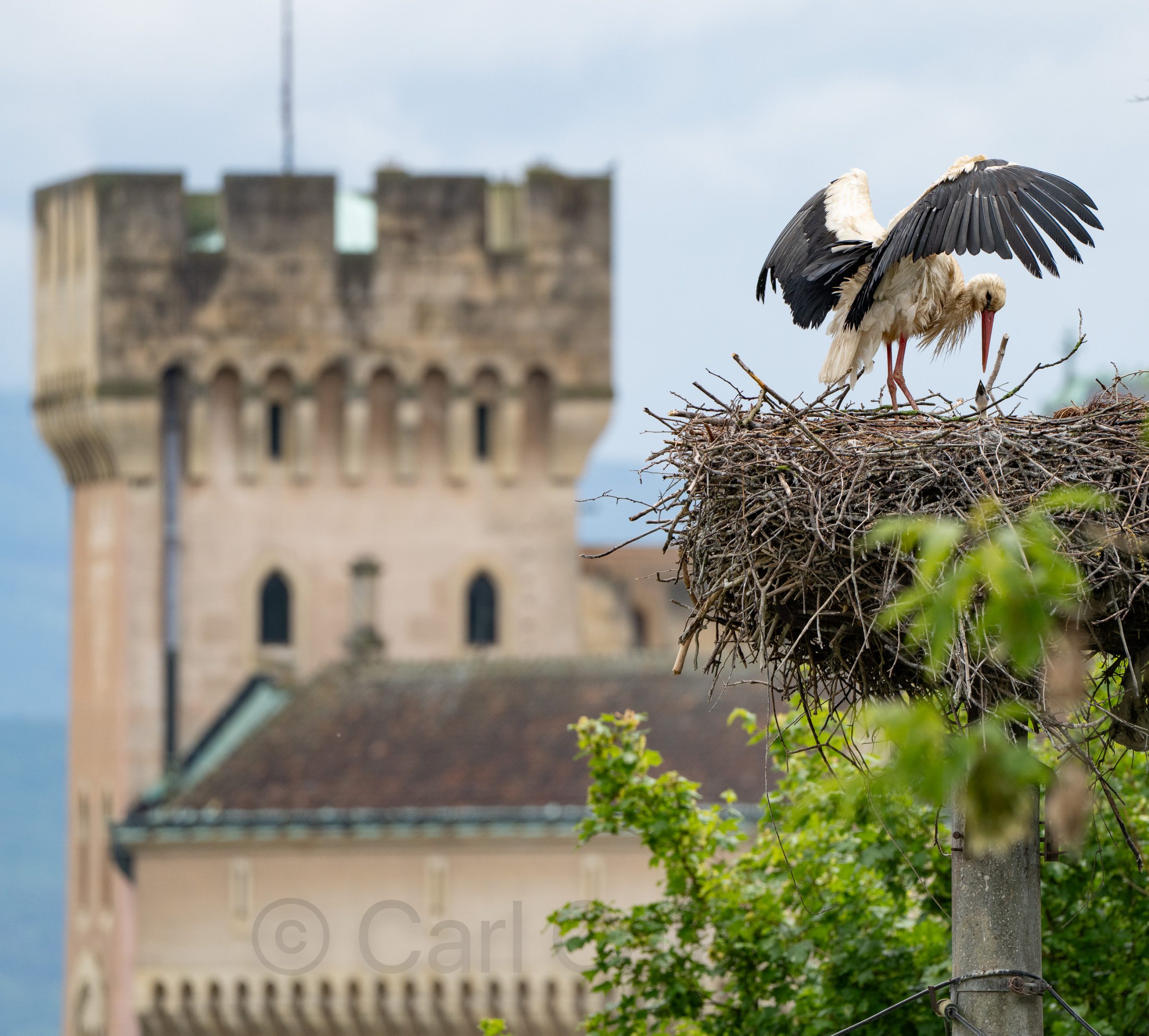
As I began my drive back to the Czech Republic, I noticed a White Stork returning to its nest to feed its young (see small head reaching up).
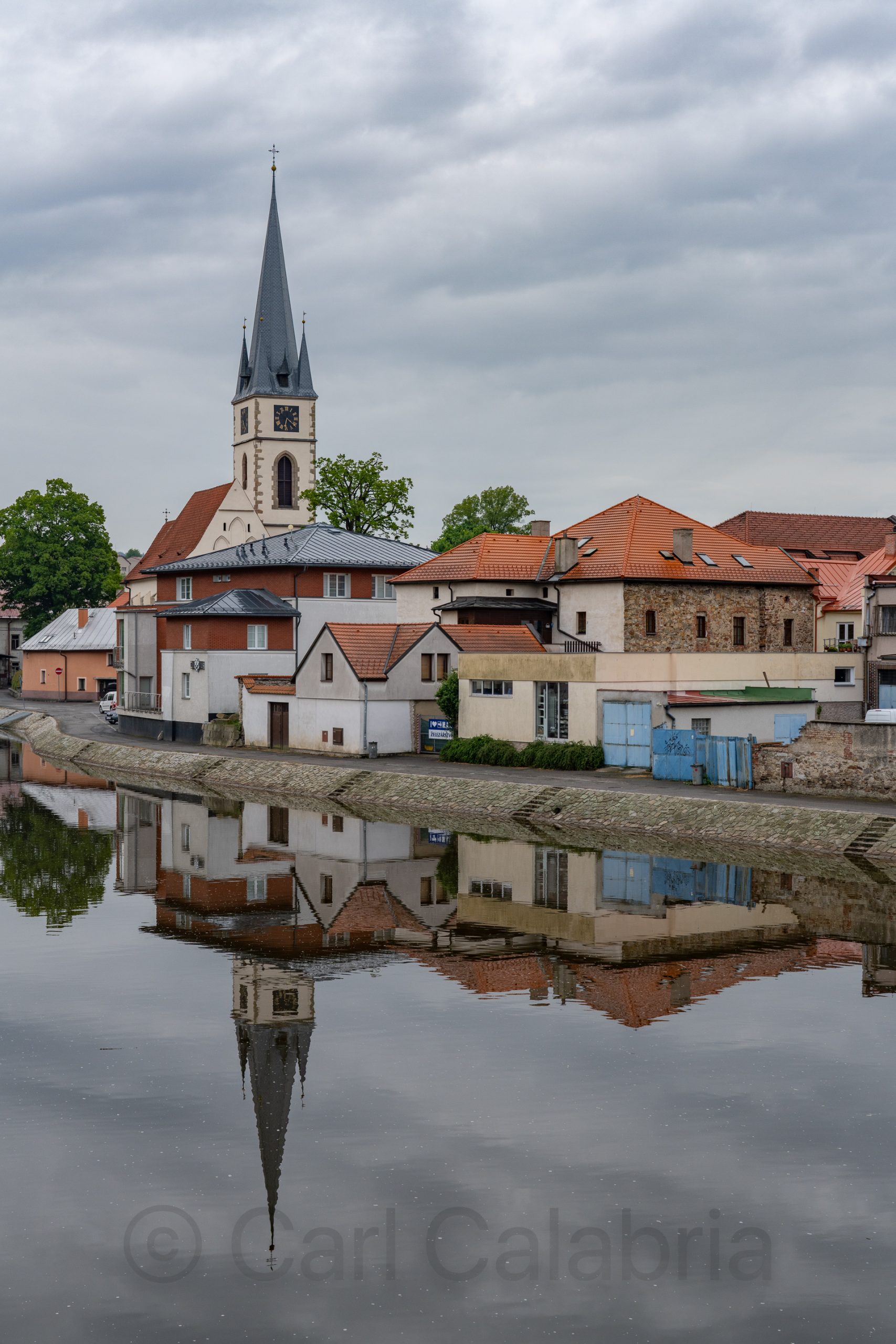
While driving to Slovakia, I made several stops along the way, some planned, some spontaneous. I took the photo below after crossing a bridge and seeing the reflection in the water. Such scenes are common in the many small towns that dot the countryside.
Driving here has been mostly enjoyable but very challenging. Very little of it has been on the highways, which are well-maintained and have an 80mph speed limit. The secondary roads are also in good shape, but invariably narrower than one would think reasonable and always winding. You must pay attention for every second and I often found it impossible to reach the speed limit of 55mph and when I did, it was too slow for the cars/trucks behind me. These roads connect towns and village which you reach every 2 to 5 minutes where the speed limit abruptly changes to 30mph, a speed which actually allows you to look up and enjoy the scenery. Basically, it is white-knuckle driving for several minutes interrupted by equal periods of relaxation repeated hundreds of times.
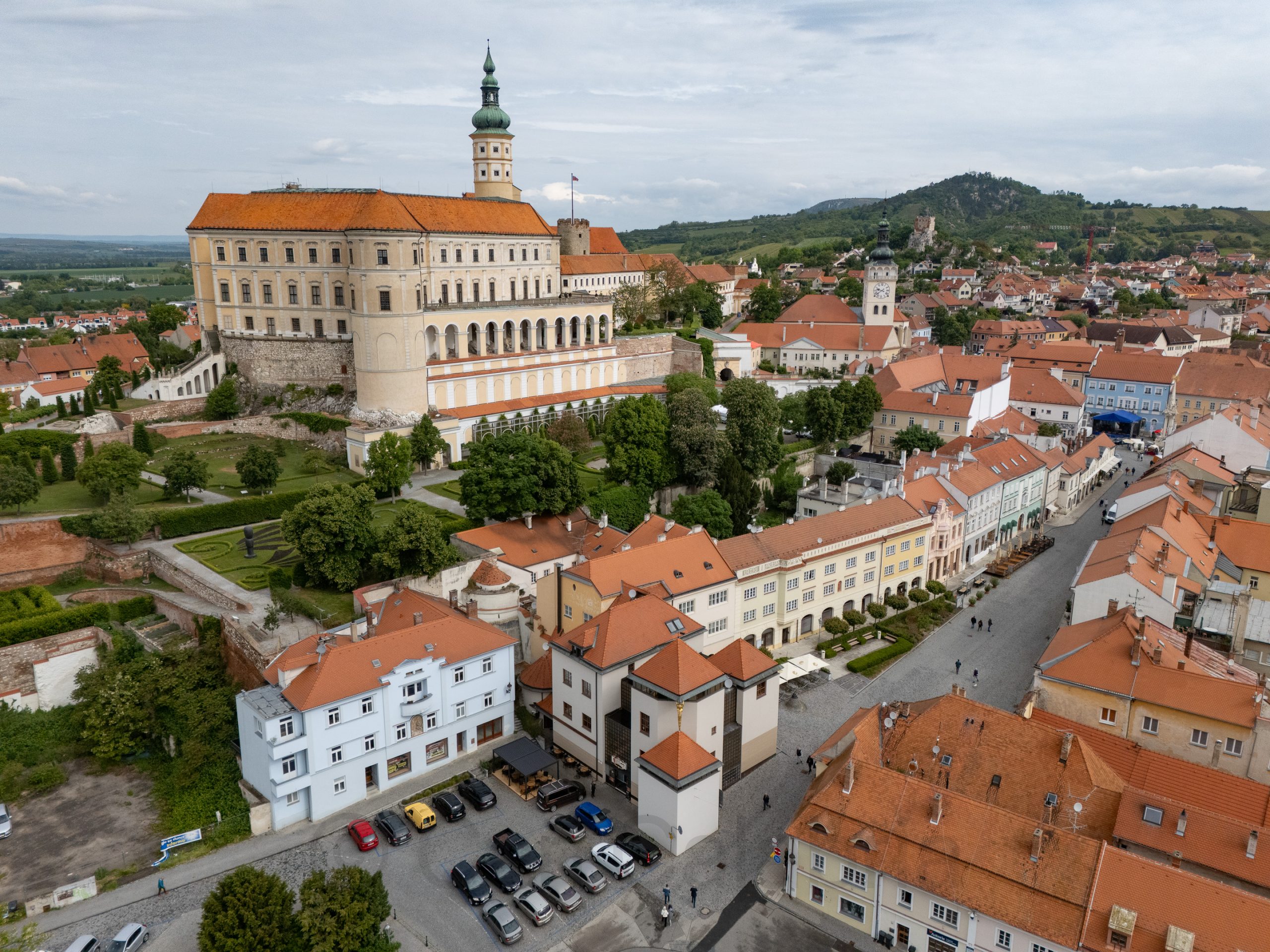
The Mikulov Castle, perched on a hill near the Austrian border, dates back to the late 13th century and was originally owned by the Liechtenstein family. In the late 16th century, it became the property of the Dietrichstein family, who transformed it into a grand Renaissance and later Baroque residence, making it a center of political and cultural life in the region. After a devastating fire in 1719, the castle was rebuilt in its current Baroque form and today houses a regional museum with exhibitions on local history, art, and viticulture, including one of Europe’s largest wine barrels.
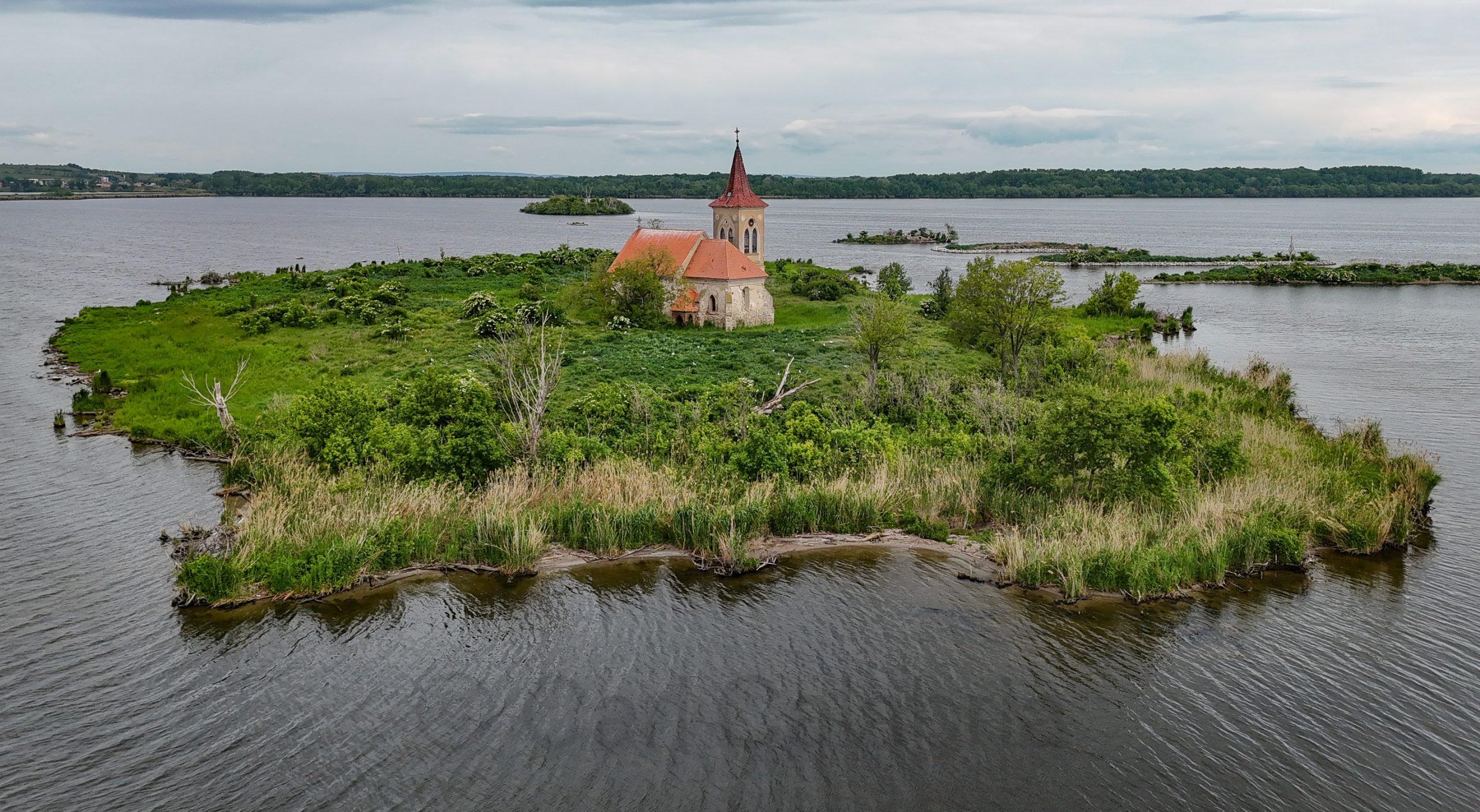
Here we have a church on an island inhabited only by birds. It is the only surviving structure of a town that was flooded to create the massive reservoir in which it sits. Churches everywhere seem to be situated on high ground (closer to God, I imagine).
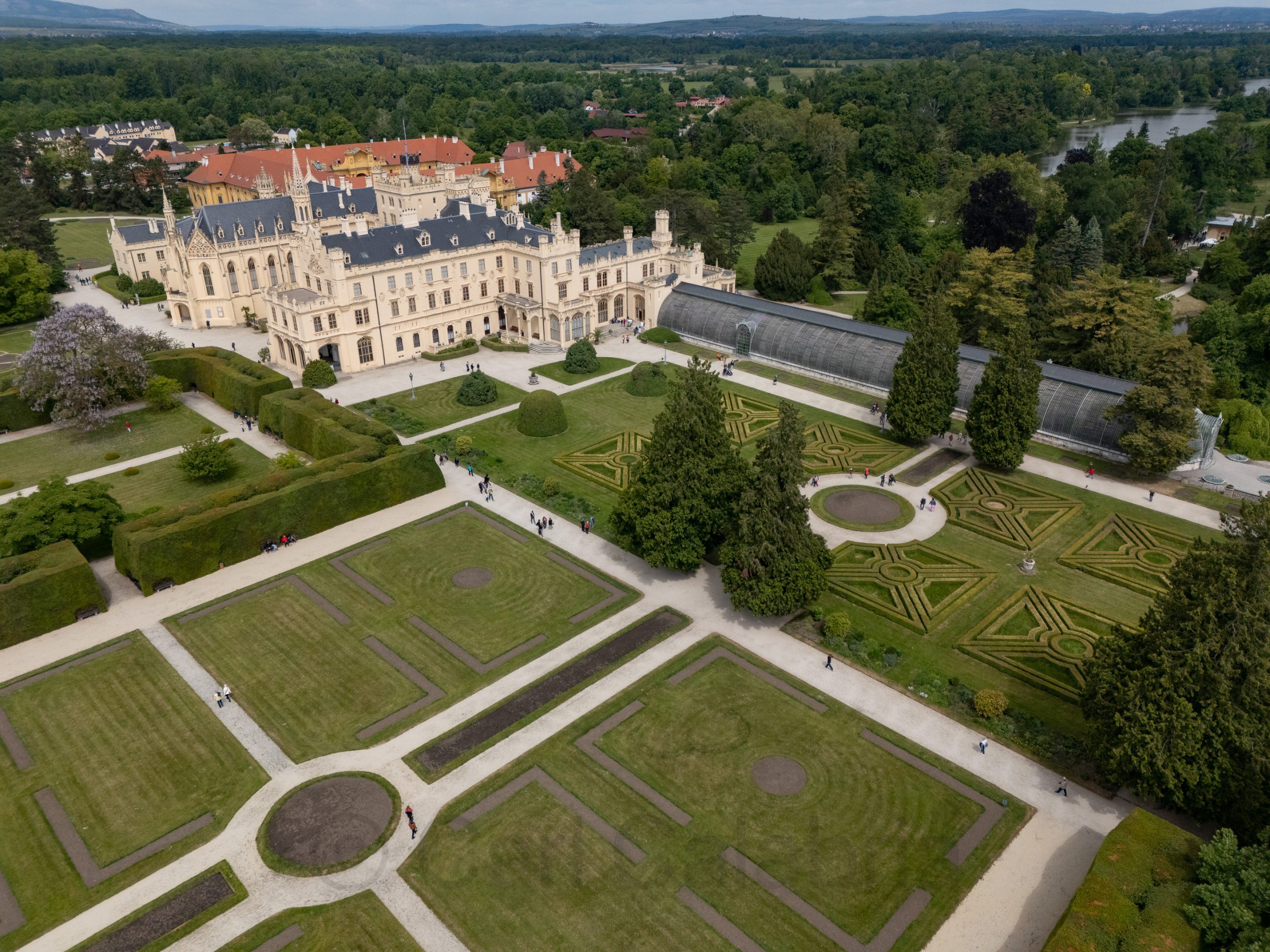
Lednice Castle in South Moravia is a stunning Neo-Gothic chateau rebuilt in the mid-19th century by the Liechtenstein family as a romantic summer residence. It sits at the heart of the Lednice-Valtice Cultural Landscape, a vast designed parkland featuring gardens, pavilions, and ornamental structures. This cultural landscape is a UNESCO World Heritage Site, celebrated for its harmonious blend of architecture and nature. The property includes the lagoon pictured in the background complete with nature walking paths and a 200-foot-tall minaret that served as a lookout tower.
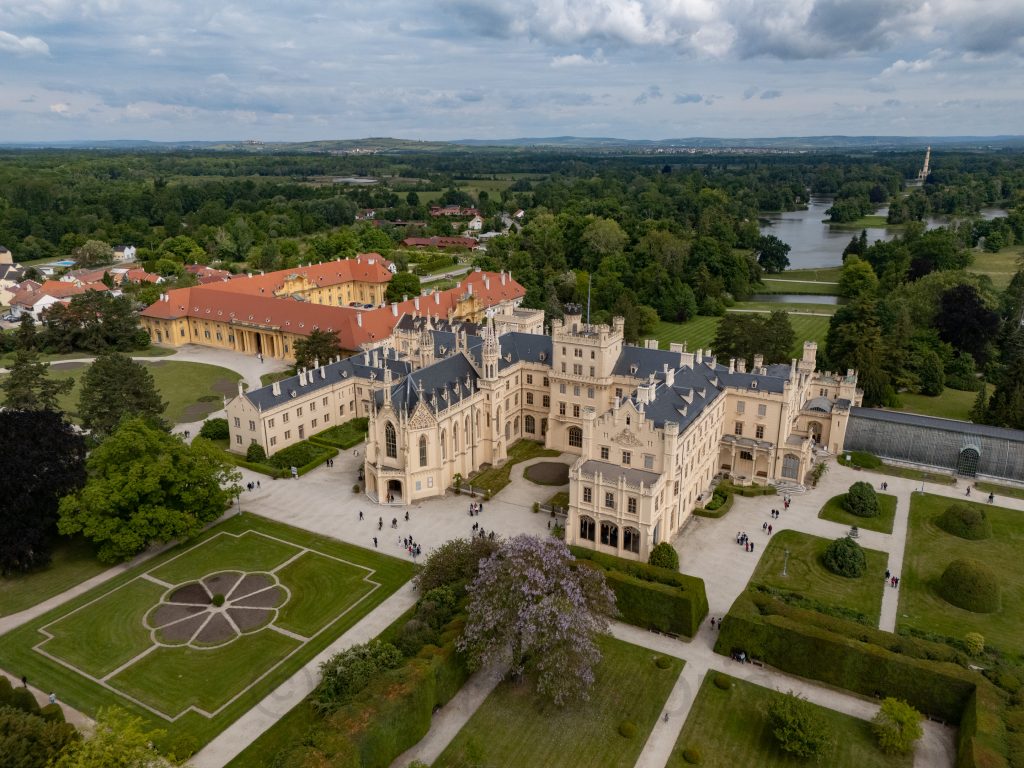
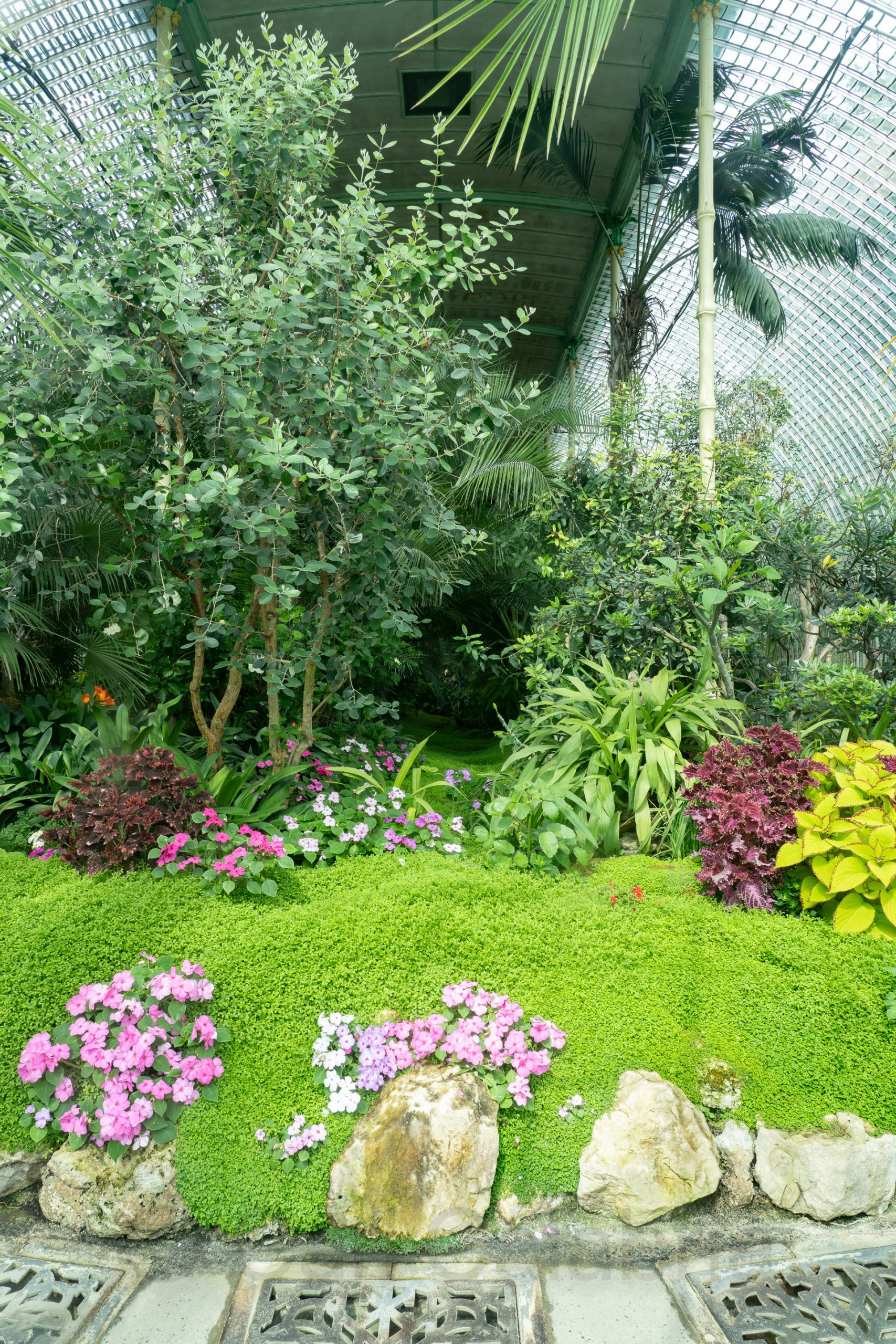
The castle includes a greenhouse (long grey tube like extension shown below) known as the Palm House. It was constructed between 1843 and 1845 as part of the estate’s transformation into a showcase of modern technology and horticultural beauty. It features an elegant cast-iron structure with bamboo-shaped columns and glass panels, designed to house exotic tropical and subtropical plants collected from around the world, some as old as 300–400 years.
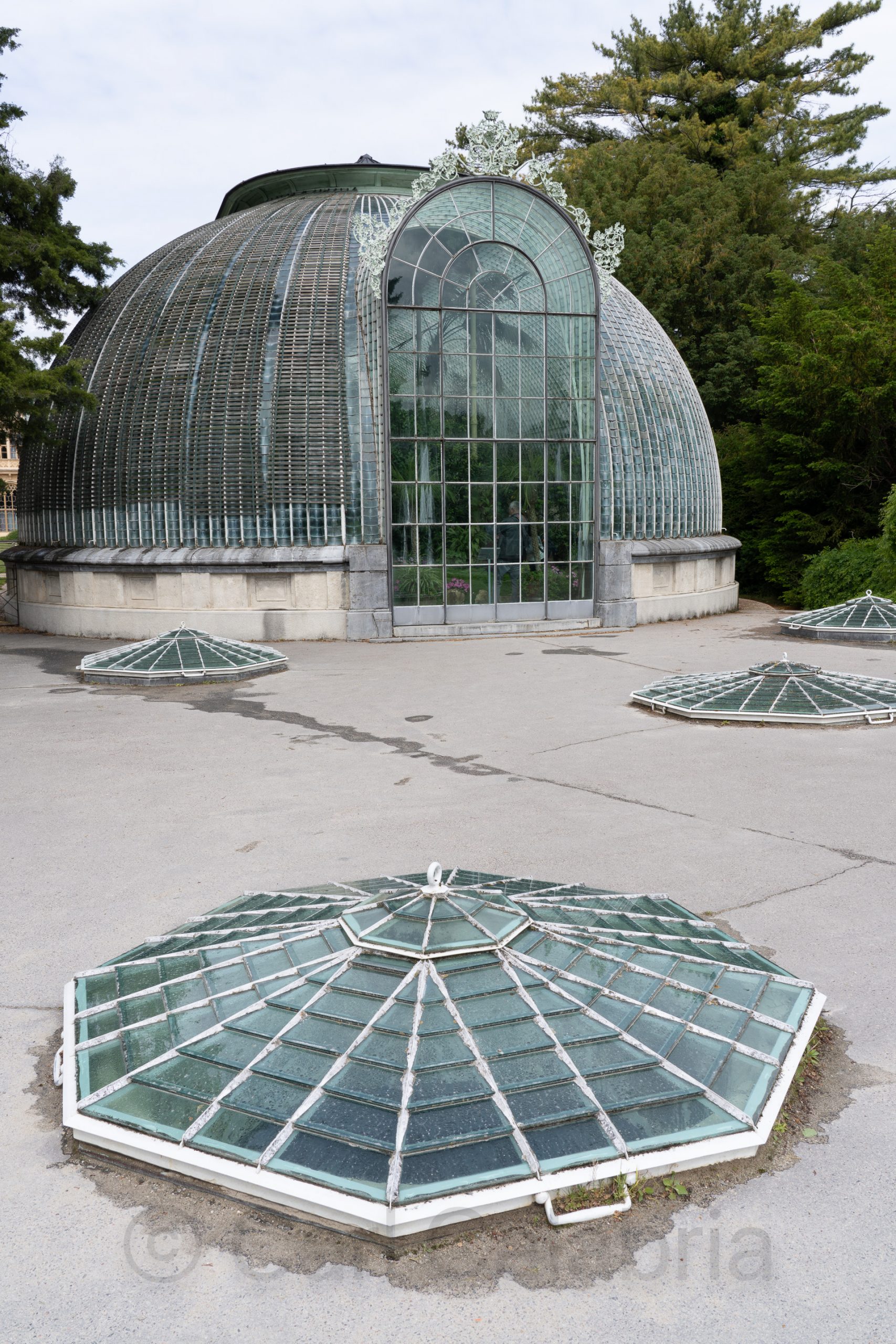
The far end of the greenhouse is pictured below, as is what I can only assume are sunlights to something magical below (I didn’t have time to investigate). The last image was shot through the greenhouse window.